The Aggie Lyceum
Turning great Aggies into great citizens
About
In support of Texas A&M’s Citizenship and Service Initiative, the College of Arts and Sciences is leading a new program, The Aggie Lyceum. Open to all Texas A&M University students, the Aggie Lyceum is a non-profit, non-partisan civil discourse, media literacy and citizen engagement program that takes its name and inspiration from the Texas Lyceum and practices “civic friendship.” The Lyceum concept dates back thousands of years to ancient Greece, where leaders discussed critical issues of the day. The Lyceum will offer events and workshops throughout the year.
Overview: From Citizenship and Service Initiative Report:
“MISSION STATEMENT: Each student who graduates from Texas A&M University, through reflection on the Aggie Core Values, instruction, high-impact experiences and leadership opportunities, will be ready and willing to serve as contributing citizens of their communities, the State of Texas, and the United States.”
The College of Arts & Sciences: will help to lead the “skills” pillar:
“’Skills’ considered most critical for well-equipped citizenry are media literacy or the ability to critically evaluate information, and the ability to engage in civil discourse. Other skills – mediation as critical to civic leadership and influencing public policy – are higher levels skills some students may choose to pursue.”
Citizenship Skills: Recommendation 3.5: Launch the Aggie Lyceum
“Initially, this program would be a workshop and dialogue series that emphasizes civil discourse and media literacy. Based on existing capabilities, Aggie Lyceum will enable the “skills” pillar by also helping colleges integrate civil discourse and critically evaluating information into majors, and helping students actively engage in shaping their own approach to civil discourse.”
Lyceum Programs
-
Weekly Civic Conversations
Our weekly moderated Civic Conversations will draw from the National Issues Forum Institute guidebooks to allow students to practice deliberation skills. Through attending Aggie Lyceum events, students will develop skills in holding respectful discussions and discourse on difficult topics and how to use and promote informed dialogue to overcome issues dividing, not uniting, individuals and humankind. Advance registration is required.
-
Weekly Workshops
Our weekly Workshop Wednesdays will offer a variety of workshops in which students will learn and practice skills related to civil discourse, media literacy, and engaged citizenship. Advance registration is required.
Our Workshops will last about 45 minutes with about 20 minutes of each event devoted to learning a new citizenship skill and about 25 minutes devoted to practicing the new skill. Collectively students will learn a set of citizenship skills that they can take with them when they leave Texas A&M, enabling Aggies to be better citizen-leaders.
1. “Dude, what’s your problem? Understanding problem framing to achieve good solutions.”
Dr. Kelly Brumbelow, Civil and Environmental Engineering
-
All of us want to solve problems, and many of us pursue professional and civic pathways focused on problem-solving, whether that’s politics, engineering, business, or many, many other pursuits. However, we’re often not aware of the crucial step of problem-framing and how it determines the types of potential solutions that might be generated and their eventual success (or failure). In this workshop, participants will identify problems that plague their lives, look at past cases of effective and ineffective problem-framing and problem-solving, and consider how the problems they’ve identified can be framed to achieve different outcomes. The importance of this process will be underscored with applications in government, technology, business, and other fields.
2. Is this Fair and Balanced?
Professor Mariano Castillo, Communication & Journalism
-
How much do you trust the news media? In this interactive session you will learn strategies for sizing up news reports across traditional and social media platforms. We’ll discuss some tough decisions that editors must make about sensitive and controversial stories. Students will get the chance to put themselves in the shoes of a news producer and discuss what decisions they would make under tough circumstances.
3. Think Before You Click: A Look at Image Verification
Professor Flora Charner, Communication & Journalism
-
They say a picture can speak a thousand words, if only those words were all true. In this age of misinformation, AI slop and doom scrolling it’s become easier than ever to consume images online that are misleading, mislabeled or completely false. This workshop will review basic image verification techniques by placing the audience in real breaking news scenarios. Participants will experience in real time how easy it is to share a bogus image and learn how to confirm its authenticity before hitting click.
4. Aggie Core Values as a Toolkit for Enhancing Your Resilience
Dr. Andrew Christjoy, Communication and Journalism and Hollingsworth Center for Ethical Leadership
-
Respect, excellence, leadership, loyalty, integrity, and selfless service aren't just words on the entrances to the MSC. Together these principles form a shield of protection with the power to protect not just ourselves but others around us. In this interactive session you will examine your strengths and weaknesses as they match with the six Aggie Core Values and discover tangible ways to integrate them into daily life for the strategic purpose of enhancing your resilience.
5. Confronting McCarthyism: Evaluating Evidence as a Historian
Dr. Gregory Daddis, Department of History
-
What does it mean to be a “patriotic” American? How do we define “loyalty” to the nation? And who establishes the standards for allegiance in a democratic society? Using the 1950s’ House Un-American Activities Committee proceedings as a framework, this session explores how we can learn from history when evaluating arguments over national identity and patriotism. Participants will assess how information is used to substantiate arguments and explore how historians critically evaluate evidence for authenticity, bias, and authority.
6. Overcoming Errors in Reasoning
Dr. Joshua Hicks, Psychological and Brain Sciences
-
We’re not typically aware of the shortcuts our brains take to efficiently process information. In this interactive session you will examine how our use of mental shortcuts influences how we think and make decisions. You will learn why these biases occur and develop strategies to minimize their impact on your important decisions and everyday interactions.
7. How to Map Out the Arguments in any Public Controversy
Dr. Mark Hlavacik, Communication and Journalism
-
Effective leaders do not merely respond to controversies; they use effective communication to shape our understanding of them. In this interactive session you will learn how to recognize different types of controversy, analyze the key decision points in any controversy, and how to assess a leader’s options for how to respond to them.
8. What Star Trek Can Teach Us About Communication and Team Work
Professor Kathryn Kelly, Communication and Journalism
-
Explore Communication styles and common pitfalls of miscommunication with the crew of the Starship Enterprise! In this interactive session we will learn to identify the four most common communication styles and discuss the tensions and benefits that can arise when different styles engage in project work together. Workshop attendees will learn to recognize the four communication styles in four timeless Starfleet officers: Captain Kirk, Captain Picard, Data, and Spock.
9. How to Read Like a Lawyer
Dr. David Koepsell, Philosophy
-
Learn to approach texts with the precision and insight of a lawyer. This interactive session introduces you to strategies for reading cases, statutes, and arguments critically and effectively, helping you to break down complex language, identify key issues, and sharpen your analytical skills. Whether you’re preparing for law school or simply want to strengthen your critical reading abilities, this session will equip you with practical tools you can use in any field.
10. Diagraming Arguments for Easy Analysis
Dr. Jennifer Mercieca, Communication and Journalism
-
In a world awash in persuasion it’s difficult to know how to begin to analyze the evidence, reasoning, and claims that form an argument. In this fun and interactive session you will learn a model of analysis that allows us to break down any argument into its individual parts so that you can easily assess and evaluate it.
11. I didn’t see that coming…
Dr. Dwayne Raymond, Philosophy
Judgements and decisions rely on assumptions, and even hidden principles that can produce unexpected, or undesirable consequences. This interactive session will use Trolly Car problems and other scenarios to improve your ability to reason. You will learn to draw out and test hidden commitments, and unexpected consequences, cultivating the habit of critically engaging with alternative choices before settling upon a decision.
12. Active Listening for Impact: Strengthening Every Conversation
Dr. Miranda Walichowski, Department of Educational Psychology
-
Strong communicators drive connection, inspire trust, and spark meaningful change. And at the heart of every great communicator is one essential skill: the ability to truly listen. In this interactive session you’ll explore what it means to be a good listener and practice the habits of active listening that strengthen relationships and foster collaboration. Grounded in Texas A&M’s core values of respect, leadership, and selfless service, this workshop will help you bring out the best in your personal, academic, professional, and leadership conversations.
-
Event Calendar

Contact
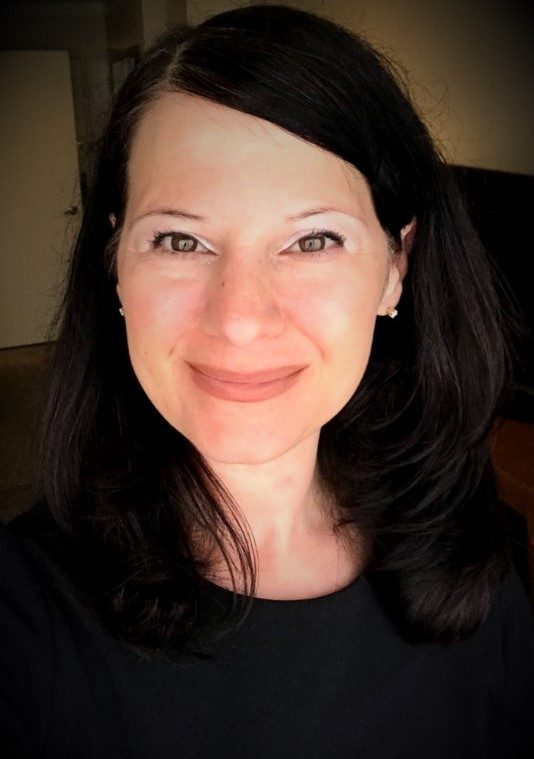
Christian Brannstrom
- Senior Associate Dean for Undergraduate Education
- David Bullock Harris Professor of Geosciences
- Professor of Geography
- Office: Academic Building, 4th Floor
Administrative Contact